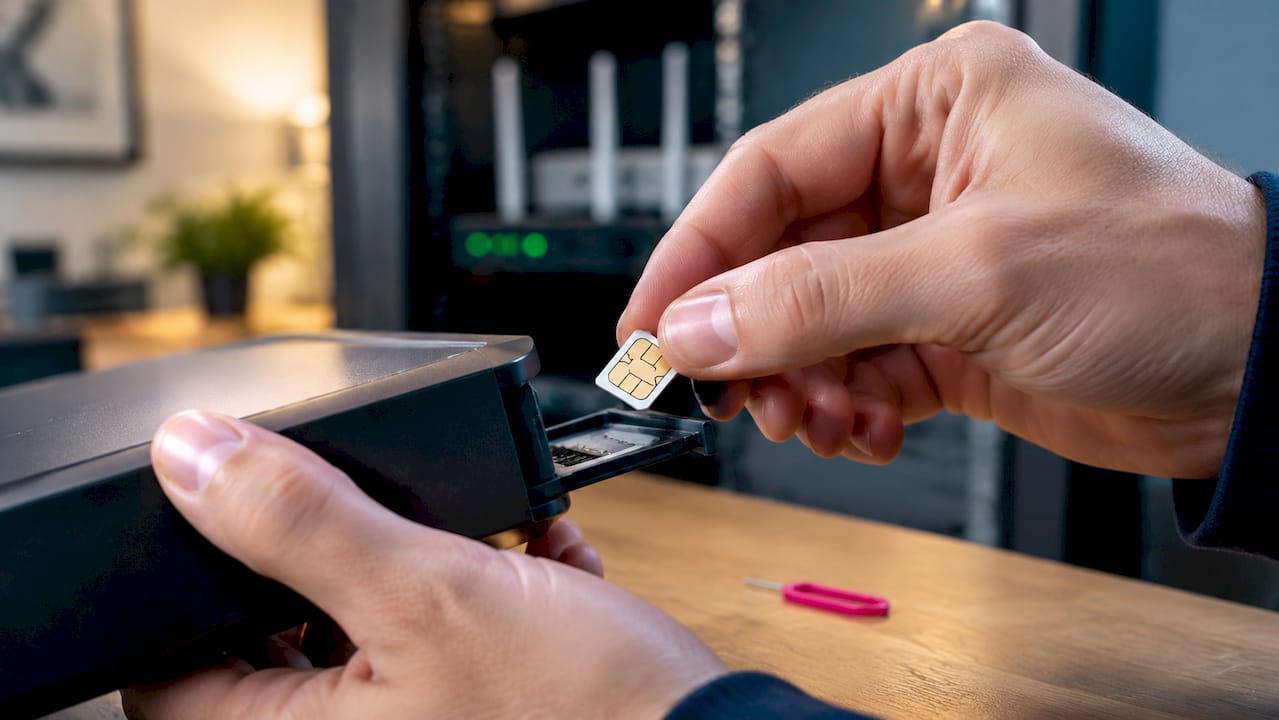
5 Checks to Choose a Multi Network SIM for UK Businesses
11 September 2026
5 Checks to Choose a Multi Network SIM for UK Businesses
A multi-network SIM (or eSIM) lets one device connect to whichever permitted mobile network it recognises, rather than locking you to a single operator’s mast. It suits anyone who moves between patchy coverage areas, and it’s genuinely useful for businesses that need failover on a router, CCTV feed, or payment terminal. If uptime matters to you, a short no-contract trial is the sensible first step.
TL;DR:
- A true multi-network SIM uses either fixed multi-IMSI profiles or eUICC profiles, with the latter offering over-the-air updates and greater flexibility.
- Non-steered SIMs generally provide better resilience, as they connect to the strongest permitted network without bias toward a specific operator.
- Coverage across at least four UK networks and testing during worst-case scenarios are essential for reliable performance before committing to a provider.
- Active sessions can still be interrupted during network switching, and device antenna quality significantly impacts actual connectivity.
- UK regulations require proper data protection and support considerations, but do not restrict multi-network SIM deployment in business applications.
Table of Contents
- What is a multi network SIM and how does it actually work?
- Who actually uses a multi network SIM?
- How do I choose and test a multi network SIM before committing?
- What are the limits and hidden costs of a multi network SIM?
- Are there UK rules that affect multi network SIM use?
- Client perspective: how does Essex Telephone Systems approach multi-network connectivity?
- How Essex Telephone Systems can help with multi-network connectivity
- Sources
- FAQ
What is a multi network SIM and how does it actually work?
Two different technologies get marketed under the same “multi network SIM” banner, and mixing them up leads to disappointment.
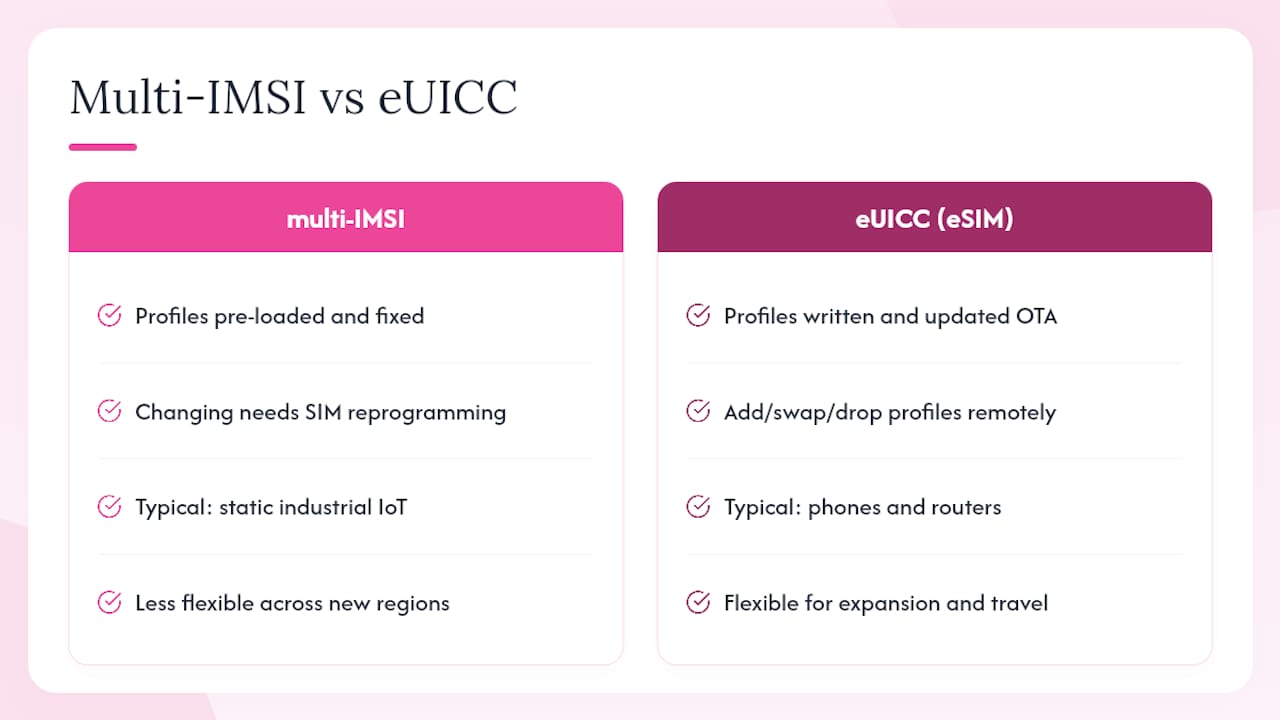
The first is multi-IMSI. A single physical SIM stores several IMSI identities (the unique codes that tell a network which subscriber it’s talking to), each tied to a different operator profile. The device switches between these pre-loaded profiles, but the list is fixed at the factory. Changing which networks are available means reprogramming the SIM, not a quick software tweak, as Onomondo’s explainer on multi-IMSI sets out. That rigidity is fine for a static fleet of sensors; less fine if your business expands into a region the SIM was never provisioned for.
The second is eSIM technology using an eUICC (embedded universal integrated circuit card). This is the consumer-facing route: profiles get written and updated over the air, so a phone or router can add, swap, or drop network profiles without anyone touching the hardware. Pelion’s comparison of multi-IMSI and eUICC is a good primer on why eUICC has become the default for phones while multi-IMSI still dominates industrial IoT.
Here’s the part most marketing glosses over: your device decides which network to use, not the SIM provider. The modem follows 3GPP PLMN selection rules, and network choice is closer to a permitted/not-permitted checklist than a live signal-strength contest, according to Hologram’s breakdown of mobile network selection. A “best signal” claim usually means “best signal among the networks the SIM is allowed to try”, evaluated periodically rather than packet by packet.
This is also where steered versus non-steered logic matters. Steered SIMs favour a commercial partner network when signal is roughly comparable; non-steered SIMs attach to whichever permitted network is strongest at that moment, which Wave Connect’s guide to multi-network SIMs flags as the better choice for pure resilience. Switching networks also means a fresh attach process, which can interrupt an active call or data session, and fixed APN or IP configurations don’t always travel cleanly between operators.
Who actually uses a multi network SIM?
The technology earns its keep wherever a single point of failure would be expensive or embarrassing.
- Router backup and broadband failover. A 4G/5G router with a multi-network SIM keeps a shop, office, or site online if the primary broadband line drops.
- CCTV and telemetry. Remote cameras and monitoring kit that can’t afford a signal blackout benefit from a SIM that isn’t tied to one operator’s coverage gaps.
- Fleet trackers. Vehicles crossing different regions hit patchy coverage from any single network; a multi-operator SIM smooths that out.
- POS terminals and temporary sites. Pop-up shops, market stalls, and construction sites often sit in mobile blackspots for at least one carrier.
- Remote and field teams. Staff working from vans, client sites, or rural locations get more consistent data without juggling multiple handsets.
Small businesses chasing uptime, rural users stuck with unreliable single-network coverage, and IoT fleets spread across regions all sit squarely in the target audience. On the device side, check that a phone genuinely supports eSIM technology, that a router’s modem supports multi-profile switching, and that any tracked device or terminal has been tested with the SIM before wider rollout, since Fuse Mobile’s glossary entry on multi-network SIMs notes that consumer multi-network products are typically eSIM based and sit on rolling, trial-friendly contracts.
How do I choose and test a multi network SIM before committing?
Five checks separate a genuinely resilient setup from a SIM that quietly underperforms.
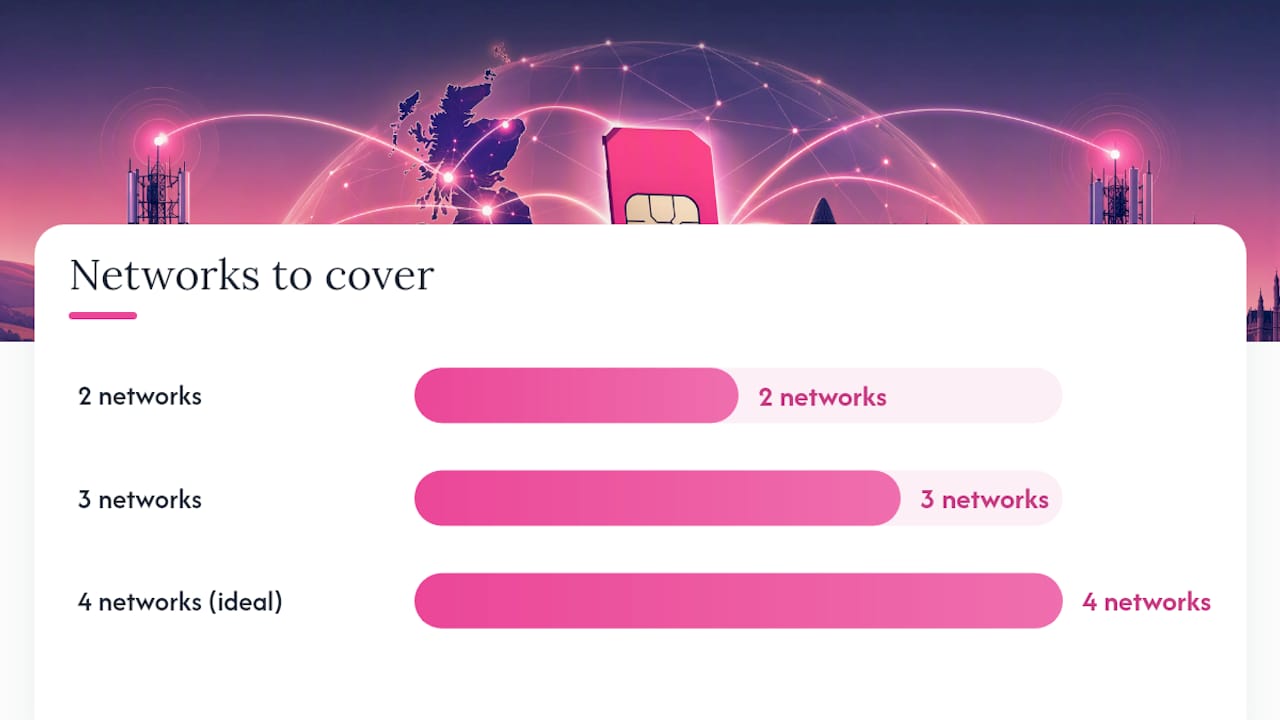
- Networks covered. Aim for coverage across the UK’s major networks, ideally four, rather than two or three. More permitted networks means more chances of a signal at any given site.
- Switching mode. Ask whether the SIM is steered or non-steered. For pure uptime, non-steered tends to serve you better, since it isn’t biased toward a commercial partner.
- Contract and trial terms. Look for a no-contract or short trial period so you can test real-world performance before signing anything longer.
- UK billing and support. Confirm invoicing and technical support are UK based, particularly if you’re deploying across multiple business sites.
- Plan type. Data-only suits routers and IoT devices; voice-capable plans suit staff handsets. Fixed IP is a separate add-on some providers charge extra for.
Testing is straightforward if you follow it in order. Confirm your device actually supports eSIM before ordering anything. Start the trial and install the profile. Test connectivity at your usual sites, not just at your desk. Pull signal logs or modem diagnostics where the hardware allows it. Run a basic speed and APN check under normal working conditions, then repeat at a second location if coverage varies across your business.
Pro Tip: Test during your worst-case scenario, not your best one. A router that copes fine on a quiet Tuesday morning tells you nothing about how it behaves when three networks are congested on a Friday afternoon.
Before signing, ask the provider for their exact list of supported networks, whether switching is steered, whether fixed IP is available, and what service-level agreement applies to business plans.
What are the limits and hidden costs of a multi network SIM?
A multi-network SIM is not magic. If no carrier has usable signal at a given site, no amount of switching logic can fix that, and a network change can still interrupt an active session while the device reattaches. Antenna quality and device build matter just as much as the SIM itself, particularly for routers tucked into cabinets or basements.
Pricing shapes differ sharply by use case. Consumer eSIM plans for phones tend to sit closer to standard mobile pricing with rolling terms. Multi-network IoT and data SIMs, by contrast, are usually priced per device or per data volume, with extra charges for features like fixed IP or managed monitoring layered on top.
Technical caveats worth flagging early: multi-IMSI SIMs have a fixed number of stored profiles and can’t be reprogrammed without physical or logistical effort, while eUICC profiles update over the air but depend on the device’s modem supporting it properly. 5G availability while roaming onto a secondary network isn’t guaranteed, and constant network searching can shave battery life on handheld devices.
Are there UK rules that affect multi network SIM use?
Multi-network SIMs operate under the same regulatory framework as any other mobile connectivity product in the UK. Ofcom governs how mobile operators wholesale network access, and any provider offering a multi-network product is reselling or aggregating access to existing licensed operators rather than running parallel infrastructure of its own.
Data protection is the practical compliance issue most businesses actually need to think about. If a multi-network SIM sits inside a router, tracker, or terminal handling customer data, that traffic still falls under UK GDPR obligations regardless of which network it happens to route through at any given moment. SIM authentication itself, meanwhile, relies on the same cryptographic checks (whether stored on a physical SIM or an eUICC profile) that every UK mobile subscriber already depends on, so there’s no separate security regime to navigate.
Business buyers should also check what the contract says about data residency and billing transparency, particularly for fixed IP add-ons or managed monitoring services, since these sit outside the basic mobile connectivity that Ofcom rules cover directly. None of this should put you off the technology. It simply means treating a multi-network SIM as part of your existing IT and data-handling policy, not a separate category with its own rulebook.
Client perspective: how does Essex Telephone Systems approach multi-network connectivity?
A multi-network SIM should be considered as part of a wider connectivity plan, not a standalone gadget. A site survey usually comes first: checking what signal actually reaches a building, whether a router-based failover or a handset eSIM makes more sense, and where cabling or antenna placement is quietly undermining reception before any SIM gets involved.
For local businesses, the practical benefit can be fewer engineer visits and one point of contact when something needs troubleshooting, rather than juggling separate accounts across networks. Managed billing means one invoice, not four. That consistency, more than any single feature, can make multi-network connectivity worth deploying properly rather than bolting on as an afterthought.
— Paul
How Essex Telephone Systems can help with multi-network connectivity
Some providers offer a direct alternative to piecing together your own multi-network setup from separate suppliers. They survey your site, recommend router or handset eSIM configurations based on what actually reaches your premises, and manage billing under one account instead of several.
Our business mobile contracts come without long-term lock-in, and they pair naturally with broadband failover services for businesses that need a backup connection when the primary line drops. For ongoing monitoring once a multi-network setup is live, a partner service like ArchiTECH MSP’s network monitoring can flag issues before they become outages.
If poor coverage or an unreliable single-network connection is costing you time or custom, request a free site survey or ask us to arrange a trial SIM test on your premises. Get in touch through our VoIP and connectivity services page to book a survey or request a quote.
FAQ
Is there a multi-network SIM card?
Yes. Multi-network SIMs and eSIM profiles exist for both consumer phones and business devices, letting a single card or profile access more than one operator’s network rather than locking you to one.
Can I use two SIMs from different networks?
Yes, most phones with dual SIM or eSIM plus physical SIM support let you run two separate network subscriptions side by side, though this differs from a true multi-network SIM, which uses one profile that can switch between permitted networks.
What are the best multi-network SIM deals in the UK?
The strongest deals combine coverage across four UK networks, a short no-contract trial period, and UK-based billing and support, since these three factors matter more for reliability than headline data allowances alone.
Can you get a SIM card for internet only?
Yes, data-only multi-network SIMs are widely available and are the standard choice for routers, CCTV, and IoT devices that need connectivity without voice or SMS capability.