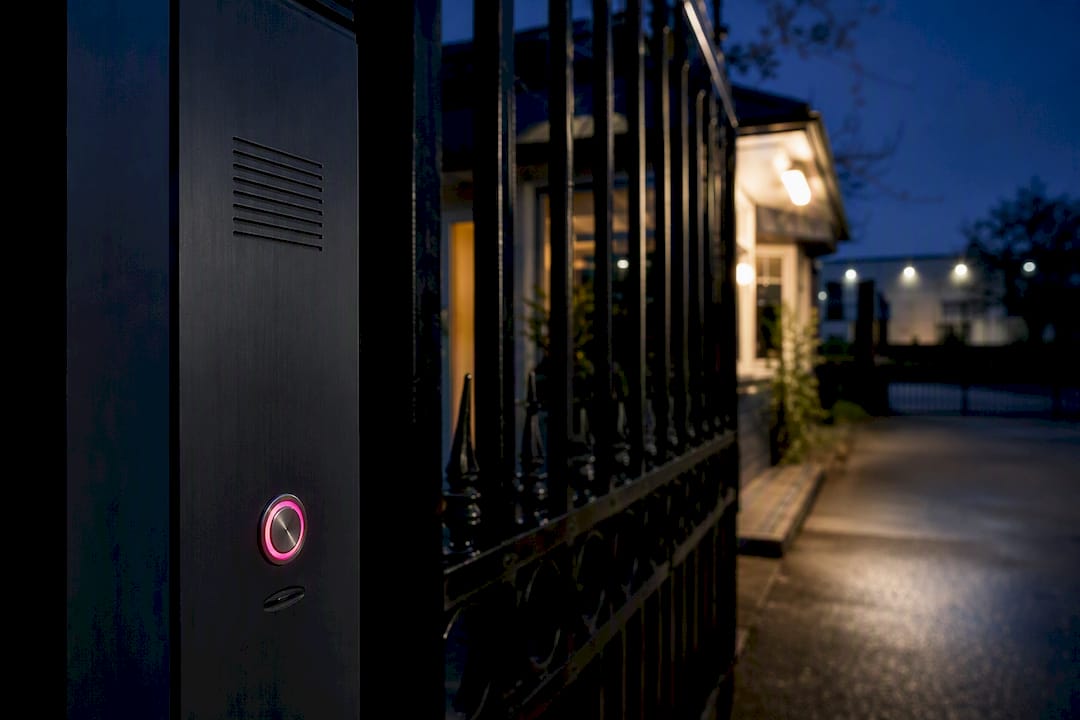
UK Properties: Gate Intercom Systems Built for PoE, Network and Safety
15 September 2026
UK Properties: Gate Intercom Systems Built for PoE, Network and Safety
For most UK homeowners and property managers, a video IP intercom with smartphone app support is the safest default, giving you visual verification, remote answering and a stable connection. Audio-only or GSM systems still make sense where cabling is impractical or budgets are tight. Your choice comes down to three things: how much verification you need, how complex the installation is, and whether safety and CCTV integration are handled properly from day one.
TL;DR:
- Wired IP systems with Power over Ethernet are more reliable but require cable installation, while wireless and GSM options are quicker to retrofit in constrained sites.
- Video intercoms offer better verification and CCTV integration, but dependent on network stability and proper IP or Wi-Fi infrastructure.
- Safety checks such as risk assessments, safety edges, obstruction testing, and proper accreditation are essential before powered gate installation to prevent accidents and liability.
- Proper cabling, surge protection, network segmentation, and backup power are critical design considerations to ensure long-term system reliability.
- Most intercom faults stem from misconfiguration or network issues rather than hardware failure, making troubleshooting focus on wiring, settings, and cleaning.
Table of Contents
- What types of gate intercom systems are there?
- Which features actually affect security and daily use?
- What safety and legal checks are required before installation?
- How should wiring and network design be planned?
- What are the most common intercom problems and fixes?
- How do you choose the right system and installer?
- How Essex Telephone Systems approaches gate intercom projects
- Get a properly integrated intercom and network setup
- Sources
- FAQ
What types of gate intercom systems are there?
Gate intercom systems fall into four broad categories, and the differences matter more than most buyers realise until something goes wrong at 11pm with a delivery driver stuck at the gate.
Audio-only systems suit low-traffic sites where callers are known quantities, such as a single-family drive with regular visitors. They cost less to buy and install, and there’s less to go wrong electronically.
Video systems earn their premium when you need to see who’s calling, whether that’s a shared entrance, a rental property, or a business gate where verification prevents unwanted access. Video intercoms also give you a recorded log of visits, which matters for disputes and insurance claims.
Wired IP (PoE) versus wireless/GSM is really a question of infrastructure. Wired IP systems running over Power over Ethernet tend to be more reliable and integrate more easily with existing telephony, but they need cable runs. Wireless and GSM units skip the digging and trenching entirely, which makes them the practical choice when cable routes are blocked or the budget doesn’t stretch to civil works, a trade-off that is well documented in trade guidance on gate intercom systems.
- Audio-only: cheapest, simplest, fine for low-footfall private gates
- Video IP: best verification and CCTV tie-in, needs cabling or strong Wi-Fi
- GSM/wireless: fastest retrofit, depends on mobile signal strength on site
- Cloud-routed apps: let you answer from anywhere, but rely on your broadband uptime
Smartphone app routing adds real convenience, letting you answer a gate call from your phone rather than a wall panel, but it shifts the reliability question onto your home broadband and mobile signal rather than a dedicated cable.
Which features actually affect security and daily use?
Specification sheets are full of features that sound impressive but change nothing day to day. A shorter list of things genuinely moves the needle.
SIP/VoIP support and PoE matter because they let the intercom sit on the same network infrastructure as your business or home telephony, rather than running as an isolated island. If you already run VoIP telephony, a SIP-compatible intercom can ring straight through to existing handsets or mobiles, cutting the need for a separate answering device.
Relay outputs and dry contacts let the intercom trigger gate motors, maglocks, or barriers directly. Without this, you’re stuck manually operating two separate systems.
Other features worth checking before you buy:
- CCTV snapshot or clip recording tied to each call, useful for later reference
- IP rating of at least IP55 for outdoor units, rising to IP66 in exposed coastal or high-rainfall areas
- Encrypted signalling (SRTP for audio/video, secured SIP) rather than plain unencrypted streams
- Remote firmware update capability, so security patches don’t require a site visit
- Multi-user call routing and a visitor log for shared or managed sites
Pro Tip: Ask any installer whether the intercom’s video and audio streams run over SRTP rather than plain RTP. Unencrypted streams can be intercepted on a shared or poorly segmented network, which defeats the point of a “secure” entry system.
What safety and legal checks are required before installation?
Powered gates are machinery, not just hardware, and the HSE’s guidance on powered gates is explicit that a proper risk assessment and safe commissioning process are basic good practice, not optional extras. Skipping this step is where most serious accidents and liability claims originate.
Before signing off any installation, insist on:
- A documented risk assessment covering trapping and crush points around the gate’s full travel
- Safety edges, photocells, or pressure-sensitive devices fitted at all pinch points
- Obstruction testing, confirming the gate reverses or stops when it meets resistance
- Written commissioning records and a maintenance schedule, not just a verbal handover
- Confirmation the installer holds relevant accreditation, and ideally has undergone DBS checks if working unsupervised around a family home
If you’re recording visitors on video, the government’s guidance on domestic CCTV use sets out your responsibilities around storage, retention, and not capturing more of a neighbour’s property than necessary. These checks add time and modest cost to a quote, but they’re far cheaper than the alternative.
How should wiring and network design be planned?
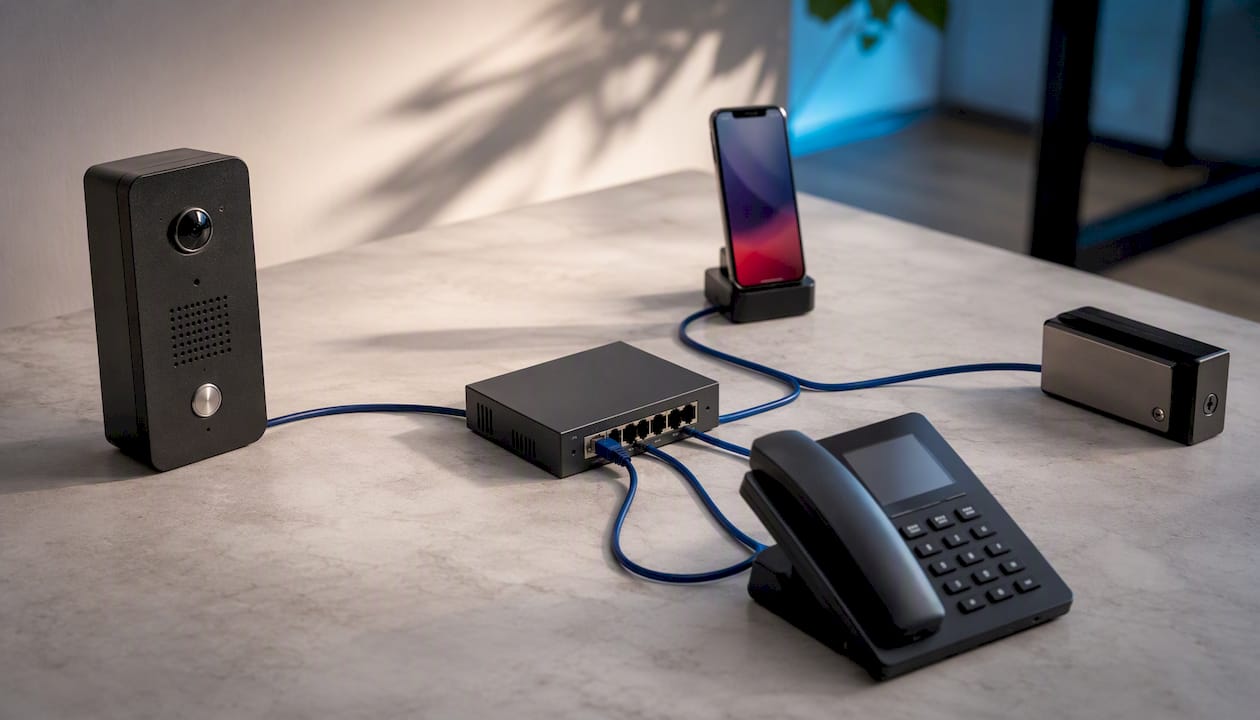
Cabling decisions made early save headaches later. Trade guidance consistently favours wired IP/PoE installations for reliability, reserving wireless or GSM for sites where trenching is impractical.
A few points worth building into any spec:
- Route cable in ducting with drainage and adequate depth to avoid frost heave and accidental damage
- Earth all outdoor equipment properly and fit surge protection, since gate posts are exposed to lightning strikes and power spikes
- Separate the intercom onto its own VLAN with QoS prioritisation if it shares a network with office or household traffic
- Avoid running the intercom purely on a shared domestic Wi-Fi signal at the gate post; signal drop-outs there cause most “the gate isn’t answering” complaints
- Fit a battery backup or capacitor buffer, since a powered gate that fails during a power cut can trap vehicles inside or outside
Structured cabling done properly at the outset, something covered under professional network cabling, avoids costly retrofits later.
What are the most common intercom problems and fixes?
Most faults trace back to configuration rather than broken hardware. A troubleshooting review of gate intercom faults finds recurring issues around no power at the panel, poor audio quality, video display faults, and gates failing to open even when the call connects properly, as detailed in this troubleshooting guide.
Work through these steps before calling anyone out:
- Check the panel has power and the connection cable or antenna hasn’t come loose
- Confirm the directory entry and phone number routing are correct, since a mistyped digit is a common cause of “no ring” complaints
- Restart the router or access point if video or app connectivity has dropped
- Clean the camera lens and speaker grille, since dirt and cobwebs degrade both video and audio quickly
- Test the relay wiring to the gate motor if calls connect but the gate doesn’t move
Pro Tip: Keep a simple written log of who has access codes and app logins. Most “someone got in who shouldn’t have” incidents trace back to an old tenant or contractor whose access was never revoked.
Set a maintenance cadence, quarterly cleaning and connection checks, an annual full safety-device test, and firmware checked whenever the manufacturer issues an update. Escalate to a qualified installer when relay wiring, motor faults, or network configuration are involved.
How do you choose the right system and installer?
Match the technology to how the site is actually used, not to the most impressive spec sheet. A gate access-control review makes the point plainly: mismatched systems lead to workarounds, propped gates, and shared codes, all of which erode the security you paid for, according to this gate access control review.
Run through this before accepting a quote:
- Does the site need visual verification (video) or is audio alone sufficient?
- Is a wired PoE run feasible, or does the site favour GSM/wireless?
- Does it need to integrate with existing telephony, CCTV, or an access control system?
- What safety devices are included, and will the installer provide written commissioning records?
- What’s covered under warranty, and who handles firmware updates and aftercare?
Ask directly about SLA response times for faults, and get the commissioning checklist and safety test results in writing at handover, not promised verbally. A quote that skips safety devices or commissioning documentation entirely is a red flag worth walking away from.
How Essex Telephone Systems approaches gate intercom projects
We treat intercom, networking and gate automation as one integrated commissioning job rather than three separate trades bolted together, because that’s where later faults originate. The team documents every handover and offers ongoing maintenance packages rather than a one-off install and disappearing act. Projects typically run through a site survey, cabling and PoE design, full commissioning against safety standards, then user training on the app and directory setup. This article was written by Paul; get in touch if you’d like a survey scoped for your site.
— Paul
Get a properly integrated intercom and network setup
Most intercom suppliers stop at the gate post. Essextelephonesystems designs the whole path, from the PoE cabling and network segmentation through to the telephony that answers the call, because a video intercom is only as reliable as the network carrying its signal. If you already run business VoIP or are planning a new phone system, integrating intercom calls directly into your existing VoIP setup means visitors ring straight through to the handsets or mobiles your team already uses, with no separate answering device to manage.
For property managers overseeing several sites, that same integration extends to shared telecoms infrastructure and ongoing support, covered under our property maintenance service. If you’re specifying a new gate intercom or replacing an unreliable one, request a site survey and we’ll design the cabling, network and commissioning plan around your actual usage, not a generic template.
Sources
For the underlying safety and privacy rules, see the HSE’s powered gates guidance and the government’s domestic CCTV guidance.
- HSE - Powered gates: basics
- Guidance on the use of domestic CCTV
- Gate intercom systems explained for UK homes and businesses
- Gate access control review for UK buyers
FAQ
What is the best gate intercom system?
For most homes and managed sites, a video IP intercom with PoE wiring and smartphone app support gives the best mix of reliability, verification, and integration. Wireless or GSM versions suit sites where cabling isn’t practical.
What is the best gate opener system?
The best gate opener pairs a properly rated motor with commissioned safety devices, photocells, safety edges, and obstruction testing, confirmed against HSE guidance for powered gates. The intercom and opener should be commissioned together, not as separate afterthoughts.
Which is the best intercom system?
There’s no single “best” system independent of the site. Video IP intercoms suit sites needing visual verification and CCTV integration, while audio or GSM units suit lower-traffic private gates or difficult cable runs.
What are the common problems with intercoms?
The most frequent faults are directory or phone number misconfiguration, network drop-outs, dirty cameras or speakers, and relay wiring faults that stop the gate opening even when the call connects. Most of these are configuration issues rather than hardware failures.